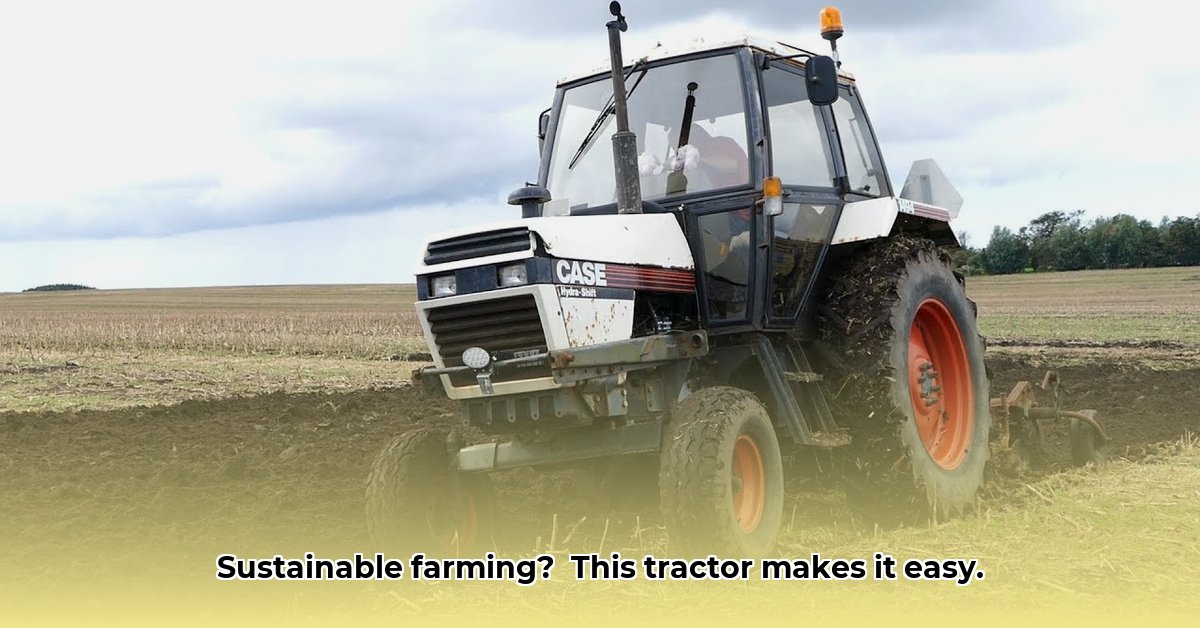
Case 1494 Tractor: A Sustainable Farming Choice?
The Case IH 1494, a workhorse from the 1980s, presents a compelling yet complex proposition for sustainable farming. Its age introduces both advantages and significant challenges that require careful consideration. This guide helps you determine if a Case 1494 aligns with your sustainable agricultural goals. For further discussion and community support, check out the Case IH forum.
Fuel Economy: A Balancing Act
The Case 1494’s 3.6-liter four-cylinder diesel engine potentially offers better fuel efficiency than larger, modern tractors. This is a crucial factor in sustainable farming, where minimizing fuel consumption is key to reducing your carbon footprint and operating costs. However, precise fuel consumption data for this vintage model is scarce and varies greatly depending on factors like terrain, workload, and operator skill. Does the potential fuel savings outweigh the increased risk of maintenance and repair? We'll explore this further.
Maintenance and Repairs: Simplicity vs. Part Availability
The 1494's relatively simple mechanical design simplifies troubleshooting and repairs compared to more electronically complex modern tractors. This reduces reliance on specialized mechanics, potentially saving money. However, a significant drawback is the scarcity of original parts. Sourcing replacements often requires hunting through junkyards, specialized suppliers, or online communities, increasing both the time and cost of repairs. This trade-off demands careful evaluation.
Long-Term Viability: Planning for the Inevitable
The Case 1494's age is a major factor. Older equipment inherently carries a higher risk of major breakdowns, leading to costly repairs and significant downtime. While proper maintenance extends a tractor's life, the eventual end-of-life scenario must be planned for. Will you face exorbitant rebuild costs, or the complications of responsible disposal? Proactive planning for this is crucial for sustainable operation.
Actionable Steps for Sustainable Case 1494 Use
- Pre-Purchase Inspection: A thorough pre-purchase inspection by a qualified mechanic is absolutely necessary. This identifies potential issues early, preventing costly surprises post-purchase.
- Preventive Maintenance: Adhere rigorously to a preventative maintenance schedule. Regular oil changes, filter replacements, and system inspections significantly reduce the likelihood of unexpected breakdowns. This is pivotal for cost-effectiveness and prolonging the tractor's lifespan.
- Parts Sourcing Strategy: Develop a proactive parts-sourcing strategy before you need them. Identify reliable suppliers, familiarize yourself with salvage yards, and build a network within online communities.
- Financial Planning: Create a dedicated repair and maintenance fund. Unexpected breakdowns can drain resources quickly. Budgeting for these contingencies is essential.
- End-of-Life Planning: Formulate a plan for the tractor's eventual retirement. Responsible disposal is crucial for environmental stewardship. Explore options like recycling of metal components.
Sustainability: A Holistic Assessment
The Case 1494's sustainability profile is a nuanced equation. While its fuel efficiency offers an environmental benefit, the challenges in parts sourcing and the risk of costly repairs present economic and environmental trade-offs. A complete life cycle assessment – encompassing fuel, maintenance, disposal, and the environmental impact of part sourcing – is necessary for a comprehensive evaluation. Is it truly more sustainable than a modern machine? The answer depends on careful management.
Risk Assessment: A Data-Driven Approach
| Risk Factor | Likelihood | Impact | Mitigation Strategy |
|---|---|---|---|
| Major Mechanical Failure | High | High | Regular maintenance; substantial repair fund; detailed contingency plan |
| Parts Shortages | High | Medium to High | Diversified part sourcing; rebuild options; strong salvage yard network |
| Unexpected Repair Costs | Moderately High | High | Thorough budgeting; cost-benefit analysis before major repairs |
| Environmental Impact | Low (relatively) | Low | Proper fluid disposal; responsible end-of-life management |
How to Find Replacement Parts for a Case IH 1494 Tractor
Key Takeaways:
- The Case IH 1494 parts market, though niche, remains active due to continued demand.
- Sourcing requires navigating a multi-faceted supply chain, including OEMs, aftermarket suppliers, and collectors.
- Part obsolescence is a significant challenge, necessitating creative strategies.
- Understanding the parts supply chain is critical for long-term maintenance and operation.
- Preventative maintenance minimizes the demand for replacement parts.
The Case 1494 Parts Landscape: A Strategic Approach
Locating parts for a Case IH 1494 requires a multi-pronged approach. The age and discontinuation of the tractor necessitate a strategic search across various resources:
- Case IH (OEM): Begin with Case IH directly. While some parts might be obsolete, checking their website and dealer network is the first step.
- Online Retailers: Specialized agricultural equipment parts retailers like Messicks.com frequently offer parts for older tractors, including both new and used options.
- Classic Tractor Parts Specialists: Online marketplaces and forums dedicated to classic tractors often have smaller dealers and individual sellers with rare components.
- Salvage Yards: Salvage yards specializing in older machinery can be a rich source of used parts, requiring careful inspection but offering potential cost savings.
- Online Communities: Engage with online communities of Case IH 1494 owners. Networking within these groups often yields valuable tips and leads on parts sourcing.
Navigating Challenges: Obsolescence and Counterfeits
The age of the 1494 means many parts are obsolete. This requires flexibility, considering used parts or even 3D printing for simpler components. However, beware of counterfeit parts. Always verify supplier authenticity to ensure quality and safety.
Long-Term Strategies: Preventative Maintenance and Part Preservation
Proactive maintenance significantly reduces the need for replacements. Regular servicing, combined with detailed inventorying of existing parts, minimizes downtime and long-term costs.